

Welcome to the latest edition of the World of DaaS Roundup.
23andMe's genetic data made it through bankruptcy court, but the lawsuits are still very much alive. Nielsen just learned it can't force broadcasters to buy data they don't want. And the Supreme Court ruled today that your location data — held by Google, Apple, or any tech company — is constitutionally yours.
Different fights, same question this week: once your data is out there, who actually gets to control it?
This week's edition is brought to you by the World of DaaS community. If you're not already a member, join us here.
🌐 WORLD OF DAAS SUMMIT 2026
The White House & Watergate Hotel, Washington, D.C. | September 2 & 3, 2026

Our flagship summit will take place this September 3, bringing together a highly curated group of 200+ DaaS leadersfor closed-door conversations, curated roundtables, and high-signal networking.
Apply to become a World of DaaS Founding Member and secure your summit ticket for $500.
Hope to see you there.
📰 News & Reads
California can’t collect from 23andMe’s successor over its 2023 data breach.
A U.S. bankruptcy judge ruled that California cannot seek monetary damages from TTAM Research Institute, the nonprofit that bought 23andMe's assets for $305 million, over the 2023 breach that exposed genetic data for roughly 6.9 million customers. The ruling is a setback for state attorney general Rob Bonta, who had been pursuing millions in civil fines; the company's Chapter 11 plan shields it from monetary claims, though California can still seek non-monetary remedies.
Every phone leaves a trail. The Supreme Court just ruled that data trail is constitutionally protected.
In a 6-3 decision in Chatrie v. United States, the Supreme Court ruled that location data held by third-party tech companies is protected by the Fourth Amendment. Police can no longer use geofence warrants to pull location histories of millions of users near a crime scene. For anyone building or selling location data products, the ruling changes the risk calculation entirely.
Appeals court rules against Nielsen in data bundling case.
The Second Circuit upheld an injunction blocking Nielsen from forcing radio broadcasters to buy local ratings data as a condition of accessing its national data. The panel found Nielsen's pricing, a tenfold increase for the standalone national product, likely amounted to anticompetitive coercion. The ruling stems from a suit brought by Cumulus Media and sets a fresh precedent on how far data providers can go in bundling access to their products.
The model is smart. Your data is the problem.
AI adoption isn't failing because models are too weak. It's failing because companies are too messy for powerful models to understand. Smarter models don't fix bad data — they expose it faster and at greater cost. The organizations winning with AI in the next three years won't have the best models. They'll have the best data foundations.
🎙️ DaaS Podcast Spotlight
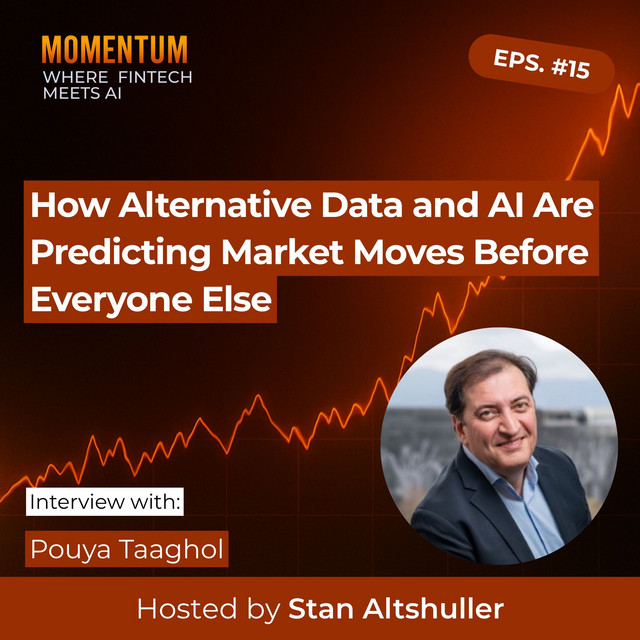
Pouya Taaghol has spent years helping investment firms use satellite imagery, geolocation data, and AI-powered financial models to identify market signals long before traditional reports are released. The central argument: scientific, data-driven investing consistently outperforms intuition — but only if you know where to find the signal and how to protect your alpha as the market gets more competitive.
In this episode, they discuss:
How satellite imagery and geolocation data are being used to predict company fundamentals weeks before earnings reports.
Why alternative data sources are shifting from a niche edge to a mainstream tool for investment firms of all sizes.
How to reduce bias in investment decisions by anchoring them to data rather than intuition.
The growing challenge of maintaining alpha as more firms adopt the same alternative data strategies.
Why the future of quantitative investing runs through proprietary data — not better models.
An Unexpected Data Read For Today.
What if data were a public resource — not a product?
Big Think shares an excerpt from Data Empire imagining a world in 2126 where citizens, not corporations, control their own data. Parks monitored by community sensors. Health clinics running on data patients voluntarily share. Transit routes decided by public vote.
It's a radical vision. But the question it raises doesn't have a settled answer yet.

Where Data Meets Art

Photo: Press Office MoMa
The MoMA just announced the next big thing in data + art.
Full Disclosure: The Edge of Information Design, opening September 27 at MoMA, will feature 30 works exploring how humans visualize information — from warming stripes to forensic oceanography. Curated by Paola Antonelli, the show argues that information design has become "a defining practice of the 21st century."
Worth putting on your calendar. Because the way we see data is changing how we understand the world.
🔥 In Case You Missed It…
M&A Funding Roundup
Chainalysis acquired Finisterra to strengthen its blockchain data infrastructure and intelligence platform.
RealPage acquired Cherre to unify $4T in real estate data into a governed intelligence platform.
SSImple received a strategic investment from S&P Global to automate SSI data quality and governance across post-trade workflows.
Oxylabs raised $130M from Warburg Pincus at a $3.6B valuation to scale its web data collection infrastructure for AI agents.
💼 World Of DaaS Job Board
The World of DaaS job board highlights opportunities from members across our community
Director, Data Products, New Balance
Looking to showcase an open role?
Apply to join and get access to exclusive perks including job board postings, curated introductions, private events, and more.
🔍 Become a World of DaaS Member
We’re headed back to D.C. next September for our flagship event, bringing together 200+ DaaS leaders for a day of candid conversations, curated roundtables, and private networking experiences. Join the leaders shaping the future of data.
Apply to become a World of DaaS Founding Member and secure your summit ticket for just $500.


